


social media marketing
Introduction
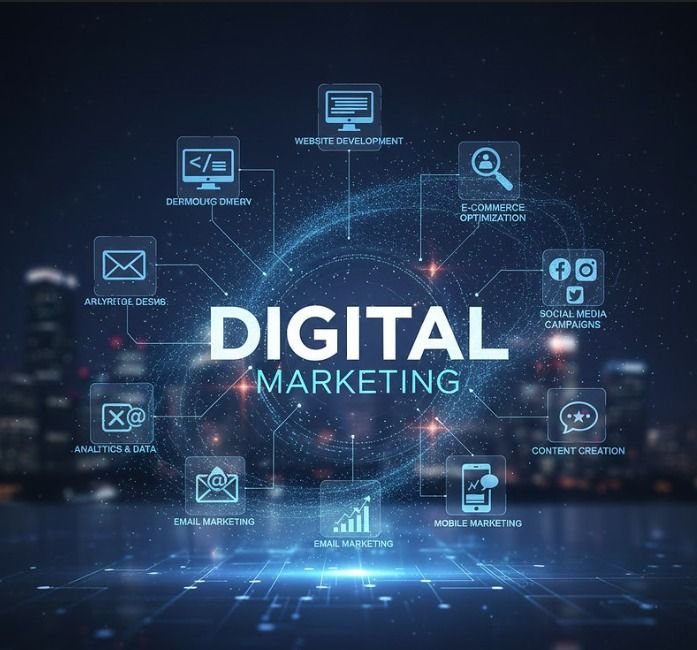
In less than two decades, social media has come a long way from being just another way for people to keep in touch with each other. First came the primitive version with text only and digital photos and videos, and now, after its short lifetime, it has grown into a super connected system that enables corporations worldwide to market and advertise their products and services. Social Media Marketing (SMM) is an essential and beneficial tool today for any modern business, big or small.
With the help of such social networks as Instagram, LinkedIn, Tik Tok, YouTube, and Twitter (X), companies and entrepreneurs can benefit from engaging with their target audience on these platforms. Thus, SMM is an integral part of any company’s marketing strategy nowadays.
The Shift from Broadcast to Dialogue
To understand why social media marketing is such an important concept, it is also essential to analyze its main differences from traditional marketing and advertising approaches. For many years, companies used one-way methods, such as TV or radio, newspapers and magazines, and other types of media. All the information was one-sidedly delivered from companies to customers with only minimal possibilities for response and dialogue.
Social media revolutionized the marketing field of activity by changing the one-way communication between companies and customers to a more interactive and dialogic mode of communication. Now, customers can actively participate in the modern marketing process by leaving comments or reviews, asking questions that have to be answered, and even responding by posting videos themselves and expressing their opinions. In other words, social media fundamentally changed the concept and principles of marketing as a discipline, shifting from one-sided persuasion, advertisement, and promotion to two-way and dialogic communication based on customers’ participation and engagement.
The Four Pillars of Modern Social Media Strategy
A successful social media marketing campaign is not built overnight. Instead, it is the result of a combined effort of four critical areas of social media marketing:
Developing Interesting Content for Social Networks : First, a social media marketer has to create content that will become the basis for the company’s social media presence. Be it videos on Tik Tok, informative infographics on the LinkedIn platform, or image-heavy posts published on Instagram, all this content should provide value to the consumer in terms of entertainment, information, or other benefits to encourage engagement and shares.
Organizing Social Media Engagement : Second, creating content is only half the battle; the other half is distributing it and engaging with the target audience. In this regard, social media marketers must invest time and effort in responding to each comment or message and generally interacting with the audience to build brand image.
Making the Most of Paid Social Media Promotion : Unlike traditional marketing channels, where placing ads is limited to a small number of mass media outlets, social media has a vast amount of data available on potential customers. Therefore it becomes much easier for marketers to make their ads appear in front of their target audience by setting the appropriate criteria.
Monitoring and Optimization of Social Media Campaigns : Finally, when a social media campaign is launched, it is possible to monitor its performance closely and optimize the marketing efforts in real-time. This way, a social media marketer will not have to speculate blindly about which ad performed better; instead, they will be able to fine-tune the running campaigns or reinvest money into the most successful ones.
Business Benefits and Strategic Advantages
The main advantage of social media marketing lies in its capacity to offer a set of benefits which are unavailable in other forms of promotion. Firstly, social media provides an enhanced level of brand exposure. Given that billions of individuals interact with various social networks every day, building brand image has become easier than ever, and even small business can compete with big names due to the relative inexpensiveness of social media marketing.
Secondly, social media is biased toward its users. This means that a good ad with a nice hook can go viral and get thousands of views in no time, getting much more traction and views than a multi-million-dollar campaign, giving a great ROI to the company. Thirdly, using social media is an easy way to collect marketing data. Using hashtags and mentions, you can get loads of useful information about your audience.
Navigating Challenges and Pitfalls
Although social media marketing (SMM) may offer substantial advantages to organizations, it is not without risks and complexities. First and foremost, social media is notorious for its unpredictability, as any changes to the algorithm configuration could impact an organization’s ability to market its products and services. In other words, even if an organization used to have considerable success promoting its goods and services on social media, it can fail to achieve the same outcomes due to minor adjustments to the platform’s inner workings.Moreover, brand image is particularly fragile on social media since an irresponsible post or even a customer’s feedback can go viral in a short time. Therefore, despite being obliged to quickly respond to any emerging crisis, the company cannot lose its brand image. Another challenge associated with social media is the problem of consumer attitudes towards privacy and data protection issues. It implies that companies should be particularly careful about handling their clients’ personal data since customers are now more interested in protecting their privacy and hold companies accountable for any data security failures.
The Future of Social Media Marketing
In addition, social commerce is rising – allowing people to find, browse, and buy goods on social media sites. Video is driving attention, as is the case with short-form. Furthermore, the use of augmented reality (AR) is also bringing in a new era of helping customers try on things virtually before purchasing.
Conclusion
Social media marketing has revolutionized business communication and relationships and turned traditional methods of selling a product upside down. Businesses can connect to their audience on a mass scale and engage in two-way communication rather than one-way broadcasting. The rules of the game might change by the day, making businesses scramble to keep up with the latest trends and developments and stay ahead of the game, but the fundamental truths of social media marketing never change.